Ahmed Sinai
Midnight's ChildrenAhmed Sinai is a merchant, husband to Amina Sinai, and father to Saleem Sinai, whose life repeatedly turns on the gap between the authority he seeks and the losses he cannot control. Leathercloth, property speculation, concrete tetrapods, and finally towels become successive vehicles for his ambition; each also exposes his vulnerability to financial reversals, drink, estrangement, and failed judgment. His most consequential transformation comes not through business but through Amina’s care: after a severe heart attack, he recovers and, at last, falls in love with her.
Identity and Early Relationships
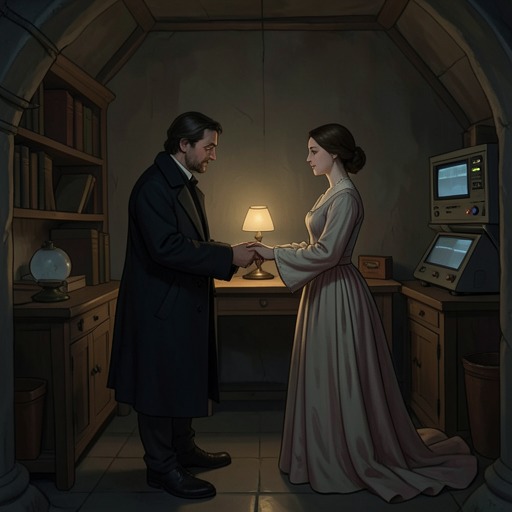
Ahmed first appears as a leathercloth merchant who had met Alia at the University. Though he seemed intelligent to her, her mother, Naseem Aziz, distrusted him because he had already been divorced at twenty. At Alia’s wedding in January 1946, Ahmed found himself drawn into conversation with Mumtaz, Alia’s newly divorced sister. Their exchange about children and failed marriages gives way to mutual sympathy; Ahmed proposes that she leave her old name behind and become Amina Sinai. The marriage begins with a promise of a fresh start, but also with the unresolved histories that each brings to it.
When the newlyweds leave, Aadam Aziz sends a green tin trunk into the railway compartment. Its contents—silver samovars, brocade saris, and gold coins given by grateful patients—represent more than a dowry: they carry the record of Aadam’s medical work and of the lives he has helped. Aadam tells his daughter that people can manage without fathers, while Naseem remarks that Ahmed is at least partly Kashmiri. The departure therefore places Ahmed within Amina’s family even as it marks her separation from it.
Amina’s attention becomes an early foundation of the marriage. When she discovers that she is pregnant, Ahmed sleeps beside her, unaware of her secret and of the gray bag of money he has hidden under the bed. The narrator describes her inexhaustible assiduity as a gift more valuable than the dowry. Ahmed’s later experience of fatherhood will unsettle the household balance that this care initially sustains.
Business Ambition and Reversals
At the Old Fort, Ahmed waits for Ravana with money worries weighing on him. The narrator presents him as unhappy, impatient with servants, and possibly disappointed that he followed his late father into the leathercloth trade instead of pursuing his earlier ambition to rearrange the Quran in chronological order. The proposed scholarship of that alternative life remains unrealized; Ahmed’s account of how the early records of the Quran were arranged reveals an interest in the problem, but not a departure from commerce.
A crisis changes his plans. Ahmed later tells Amina that, at the moment he made up his mind to leave the leathercloth business, he also rejected the Pakistan cause associated with Emerald’s Zulfikar. He decides to sell the business and move to Bombay to enter property, encouraged by Doctor Narlikar’s knowledge that land is then cheap. The decision joins personal reinvention to a wider political disagreement, but the new venture does not bring stability.
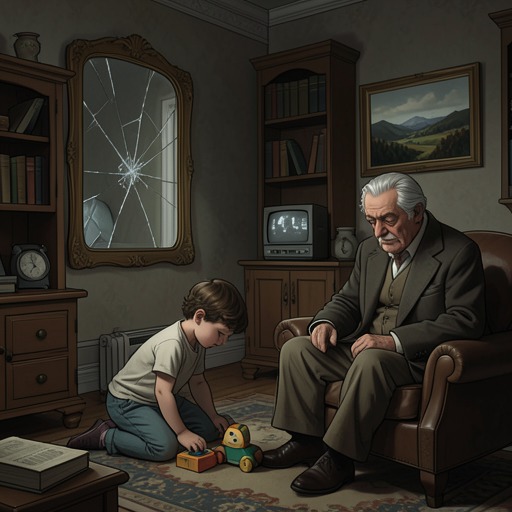
After Saleem’s birth, Ahmed feels his place in the household diminish. Amina’s efforts, once directed toward obtaining money from her husband, now serve the needs of their son. Ahmed’s joke about Saleem already striking his father after breaking his toe carries resentment beneath its humor. The household’s new center of attention helps drive Ahmed toward drinking: during Bombay’s prohibition, he obtains alcohol through doctors’ certificates declaring him an alcoholic, and eventually has servants, gardeners, drivers, Musa, and Mary Pereira secure additional rations.
Ahmed then invests himself in the tetrapod scheme, a plan to reclaim land from the sea with great concrete structures. Letters, visits, and illicit payments make his name known in the State Secretariat as a Muslim spending money freely. He drinks himself to sleep without recognizing the danger gathering around him. When his assets are frozen, the enterprise becomes associated not only with financial loss but with a lasting bodily coldness that damages his marriage and leaves Amina grieving the children she cannot conceive with him.
By the end of 1956, Ahmed approaches another attempt at the tetrapod project more cautiously. He stays in the background, keeps his name off documents, and hopes the lessons of the earlier freeze will protect him. But Doctor Narlikar dies without leaving a record of Ahmed’s involvement, and the scheme fails. Ahmed’s response to this disaster is withdrawal: he comes to treat relationships as unreliable and turns toward an increasingly abstract, solitary life.
Isolation, Work, and Recovery
Ahmed locks himself in his downstairs office before dawn and avoids the family. He refuses food from the household kitchen, relying instead on inexpensive meals brought in a tiffin-carrier. At the same time, his telephone dealings in the stock market prove remarkably successful. Even while drinking more heavily, he senses when shares may rise and sells before their fall. His financial skill conceals a worsening separation from ordinary life; prosperity and deterioration proceed side by side.
A later family crisis briefly brings Ahmed back into contact with those around him. When Saleem returns, Ahmed identifies Musa as the former servant who once tried to rob him. He then tells a leper that he forgives him, and the narrator says Ahmed is thereby cured of one obsession: he never again tries to discover the family curse he had imagined. The moment marks a loosening of a grievance, though it does not by itself end his deeper estrangement.
Ahmed’s heart attack becomes the decisive interruption. At Breach Candy Hospital, doctors discover that his heart has changed shape, with a swelling protruding from the lower left ventricle; Alice Pereira calls it a boot. Once Ahmed is brought home, Amina is jolted out of depression, lethargy, guilt, and pain. She nurses him in the first-floor bedroom where she had cared for him during the freeze, staying beside him and devoting her strength to his recovery.
Ahmed’s recovery astonishes the European doctors at the hospital. More important to the marriage, he returns to a self capable of contrition, forgiveness, laughter, and generosity. The narrator describes this change as love: Ahmed finally falls in love with Amina. His recovery gives their relationship a new beginning, but his renewed confidence also fuels another ambitious venture.
Amina Brand and Final Decline
Ahmed launches Amina Brand towels with exuberant expectations. He predicts that the company will outdo wealthy families and make its product known around the world; he insists that love, rather than manufacturing, is the secret behind its success. The narrator recognizes the lingering effects of the optimism virus in this confidence. Ahmed’s optimism, however, does not alter the habits that undermine his enterprise.
He begins treating workers as he once treated servants, imposing an old master-servant hierarchy on weavers and packers. Workers leave, objecting to being treated as menial help rather than skilled employees. Ahmed dismisses them and hires workers who will defer to him, but they steal cotton spools and machine parts. Defective towels multiply, contracts go unfulfilled, and reorders decline. The business failure thus follows from Ahmed’s conduct as well as from the impracticality of his ambitions.
On the first day of the thirty-seven-day period described as a false peace, Ahmed suffers a stroke that paralyzes his left side and leaves him with the impaired speech and helplessness of infancy. The stroke closes a career repeatedly marked by losing his way and struggling against the djinns. He remains among the faulty towels as Amina, near the end of a difficult pregnancy, faces the final crisis of the family’s life in Karachi.
During the bombing of the family home in Guru Mandir, Ahmed is killed along with Amina, Alia, and the unborn child. The house collapses amid the air attack, bringing his business failures, his marriage’s late renewal, and his long history of ambition and defeat to an abrupt end. His story does not resolve into a lasting success: the love he reaches with Amina is real, but it cannot protect either of them from the violence that destroys the household.